
Forschung zu Stahlspundwänden
Back to overview

Research · standards · application

Research in steel construction

Project register

STRANA / RESEARCH

Our research as academic staff at the University of Stuttgart has contributed to European design standards.

This experience continues to shape our engineering practice today.

01

Buckling of plated steel structures in bridges and buildings

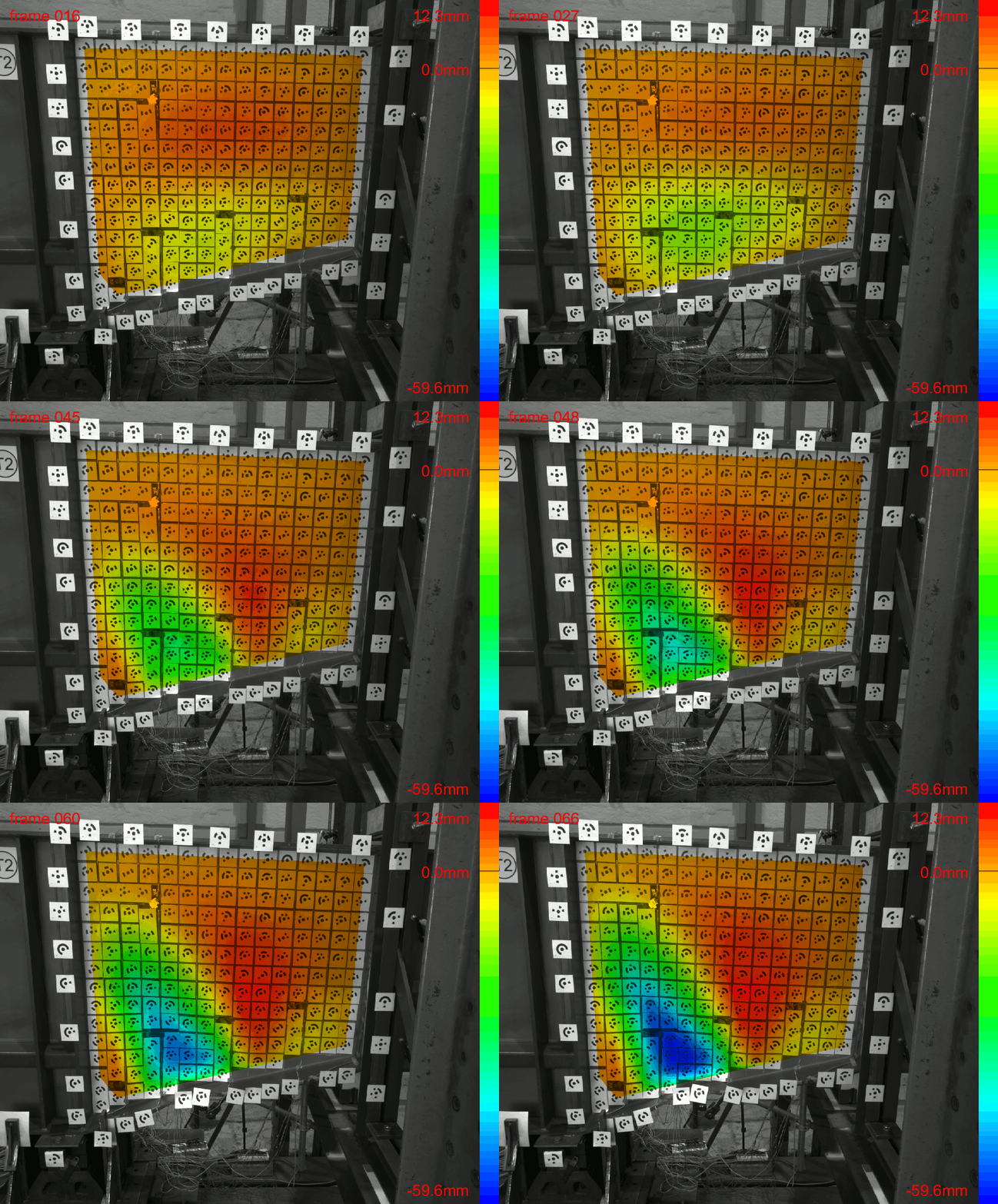
Vahid Pourostad contributed substantially to the development of steel-design rules for plated-structure buckling through international research projects and his doctoral work at the University of Stuttgart from 2014 to 2024. The studies covered stiffened and unstiffened panels under longitudinal, transverse and biaxial compression in steels from S355 to S690.
Numerische Untersuchung des Plattenbeulens

Research projects

  • Buckling of plates under multiaxial loading (2014–2017, DASt/AiF)
  • OPTIBRI – Optimal use of high-strength steel grades (2014–2017, RFCS)
  • OUTBURST – Optimization of steel plated bridges (2016–2019, RFCS)
  • Buckling investigations for the Thulba valley bridge (2017–2019, with TU Munich and Autobahndirektion Nordbayern)
  • Longitudinally stiffened panels under multiaxial loading (2018–2021, DASt/AiF)
  • Recalculation of existing steel and composite bridges (2023–2024)

Key results

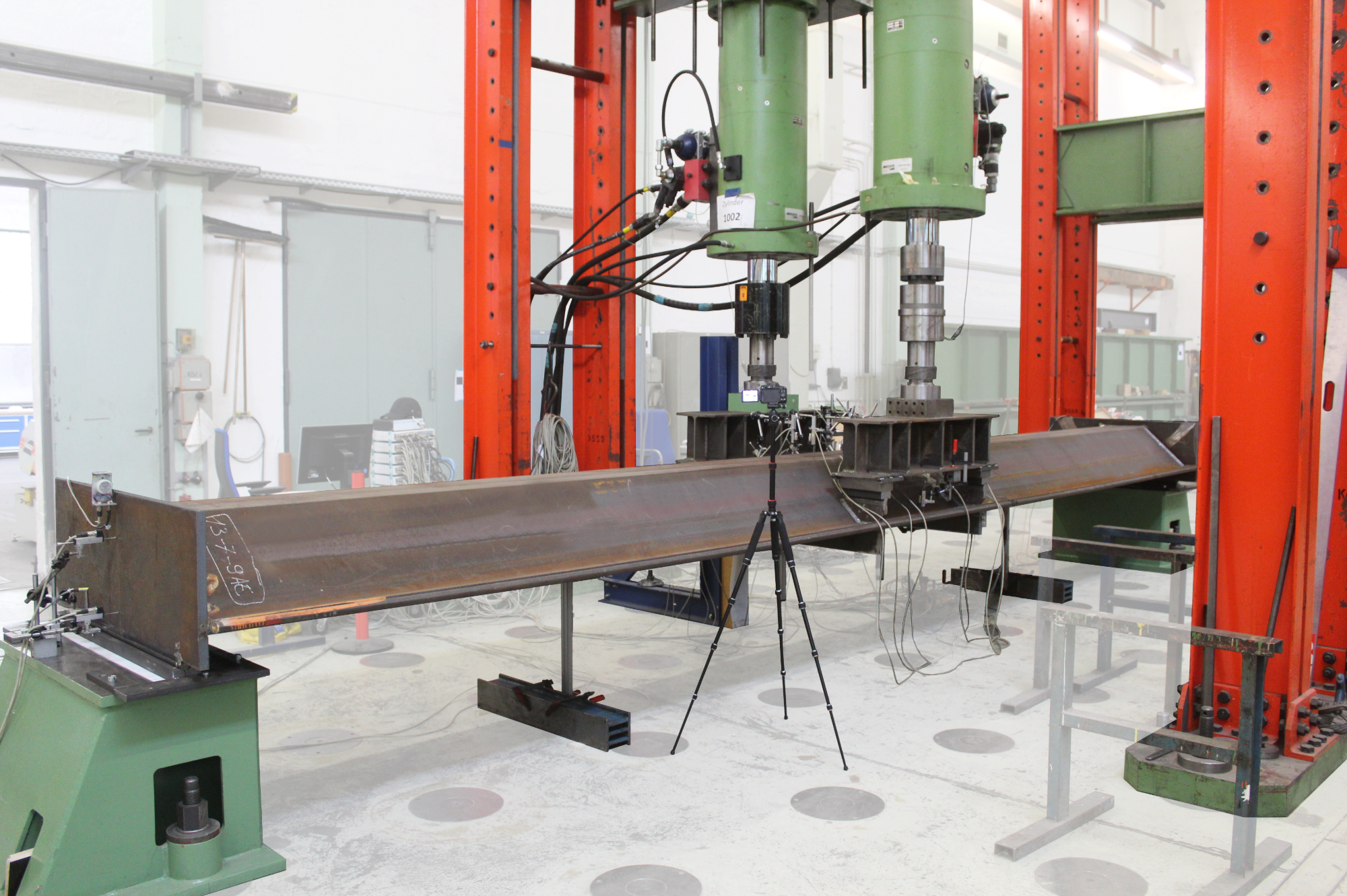
Large-scale tests were conducted to capture the real structural behaviour and recalculated using validated finite-element models. Extensive parametric studies and statistical evaluations formed the basis for several developments in the second generation of EN 1993-1-5:

  • Extension of the effective-width method to non-rectangular panels up to 17.5°
  • Interpolation between plate-like and column-like behaviour
  • Inclusion of longitudinal-stiffener torsional stiffness in the interpolation
  • Separate verification approach for biaxial compression
  • Development of the interaction approach for tensile and compressive stresses
  • Buckling verification under biaxial compression and patch loading
  • Reduction curves for panels with imperfections exceeding EN 1090-2 tolerances

02

Load-bearing and design models for steel sheet-pile walls

Through industrial studies, two IGF projects and his doctoral research at the University of Stuttgart from 2017 to 2024, Alexander Enders developed and refined design approaches for steel sheet-pile walls. The work improved representation of structural behaviour and produced practical, code-compatible models that contributed to the second generation of EN 1993-5.

Versuchs- und Berechnungsmodelle für Stahlspundwände

Research projects

  • Local resistance of slender intermediate sheets in combined steel sheet-pile walls (2017–2019, University of Stuttgart with ArcelorMittal S.A.)
  • Optimised design of combined walls for driving and final state (2018–2021, University of Stuttgart with TU Hamburg; AiF 19937 / FOSTA P1327)
  • Three-dimensional behaviour of combined steel sheet-pile walls (2021–2024, University of Stuttgart with TU Hamburg; AiF 21438 / FOSTA P1480)
  • Recalculation of existing quay walls using partial-plastic reserves (2022–2023, University of Stuttgart with TU Hamburg)

Key results

Component tests on Z-piles and partly embedded H-piles were used to determine the real structural behaviour. The results were recalculated and validated with finite-element models and supplemented by parametric studies. Statistical evaluation supported new design models for reliable and economical sheet-pile design and the second generation of EN 1993-5:

  • Partial-plastic moment resistance and resistance models for Z-piles
  • Combined bending and axial force in Z-piles using measured residual stresses and improved interaction models
  • Flexural and lateral-torsional buckling of embedded H-bearing piles, including approximate effective lengths and critical moments
  • Effective torsional inertia of partly welded double bearing piles
  • Global and local behaviour of combined walls under variable pressure distributions and installation conditions

Continue the conversation

Research with a continuing impact on practice.

Our research and standardisation work is documented in publications and committee activities.

View publications